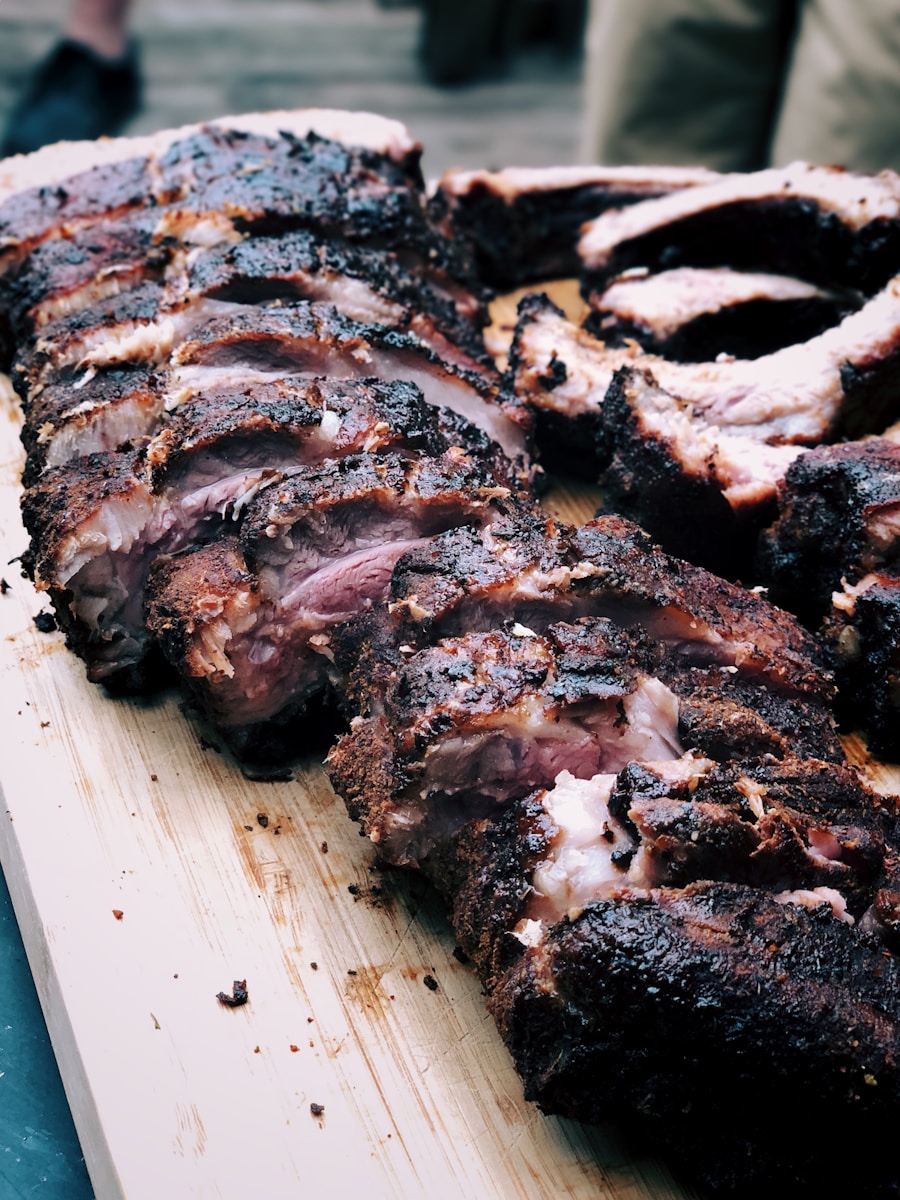
Step-by-Step Instructions
Trim the Brisket (Night Before)
Place the brisket fat-side up on a large cutting board. Using a sharp boning knife, trim the hard fat cap down to exactly ¼ inch — thin enough to render, thick enough to protect. Remove any hard, waxy fat deposits (deckle fat) between the flat and point. Trim the flat's thin edges to prevent them burning. Flip and remove the silverskin from the meat side.
Apply the Rub
Mix your salt, pepper, garlic powder, onion powder, and cayenne together. Apply a thin, even binder of yellow mustard or olive oil to the entire brisket — this helps the rub stick without adding flavor. Generously apply the rub on all sides, pressing it into the meat. You should see a thick, even coat. Wrap loosely in plastic and refrigerate overnight (8–12 hours minimum).
Fire Up the Smoker
Fire up your smoker to a steady 225–250°F (107–121°C). For wood, post oak is the Texas gold standard, but hickory or a mix of oak and cherry also work beautifully. Aim for clean, thin blue smoke — not thick white smoke which will make your brisket acrid. Place a water pan in the smoker to maintain moisture and stable temperature.
Place the Brisket & The First Phase
Place the brisket fat-side up on the grate. Insert a leave-in meat thermometer probe into the thickest part of the flat. Close the lid and don't touch it for the first 3 hours. After 3 hours, start spritzing every 45–60 minutes with your apple cider vinegar, water, and Worcestershire mixture. This helps build bark and prevents the surface from drying out. Continue until internal temp reaches 165–170°F.
The Texas Crutch (Wrap)
When the brisket hits 165–170°F (the "stall"), pull it from the smoker. Lay out two overlapping sheets of pink butcher paper. Place 4 tablespoons of butter on the paper, set the brisket fat-side down on the butter, and wrap it tightly but with room for juices to pool. Return to the smoker fat-side down. Alternatively use two layers of heavy-duty foil for a juicier — but softer — result.
Cook to Probe Tender
Continue cooking wrapped until the brisket probes tender like warm butter — typically 195–205°F internal temp, but temperature is secondary to feel. Insert your probe through the paper into the flat every 30 minutes after hitting 190°F. When the probe slides in with zero resistance, it's done. Total cook time at 225°F is usually 1–1.25 hours per pound.
The Rest (Critical Step)
This is non-negotiable. Remove the wrapped brisket from the smoker. Place it into a dry cooler (no ice) lined with old towels, wrap the brisket in towels on top, close the cooler. Rest for a minimum of 1 hour, ideally 2–4 hours. This allows the muscle fibers to relax and juices to redistribute. Skipping the rest is the #1 mistake beginners make.
Slice & Serve
Unwrap the brisket and pour the accumulated juices into a cup (gold!). Place the brisket on a cutting board. Separate the flat from the point along the fat seam. Slice the flat against the grain into ¼-inch slices (pencil-width). The point can be cubed into burnt ends or sliced against the grain at a 90° turn. Arrange on a platter and pour the reserved juices over the top.
Reviews & Comments (312)
This is genuinely the best brisket recipe I've ever followed. The butcher paper wrap tip was a game changer — bark stayed perfect and the flat was incredibly moist. Cooked a 15-lb Prime brisket and my family went absolutely wild. The resting in a cooler step is critical, don't skip it!
Third time making this — it gets better every time. My only note is that the cook time can vary a lot depending on your smoker. My 14-lb brisket took nearly 17 hours on my offset. The probe tender test is the real guide. Don't rely on time alone!
Made this for my Super Bowl party. All 16 pounds were gone in 2 hours. The spritz mixture is perfect — not too sweet, adds a little tang. I used cherry + hickory wood instead of oak and it was fantastic. Will never buy BBQ from a restaurant again.
Leave a Review